Choosing the right multi-tool manufacturer is an important decision for brands, importers, distributors, wholesalers, and private-label businesses. A reliable manufacturing partner can help you develop competitive products, maintain consistent quality, manage production costs, and build a stable supply chain.
However, not all multi-tool manufacturers offer the same production capabilities, customization options, or quality standards.
Whether you are sourcing multi-tool pliers for your brand, developing a custom EDC product, or expanding your outdoor tool collection, evaluating potential suppliers carefully can help reduce sourcing risks.
This guide explains eight essential factors to consider when choosing a multi-tool manufacturer in China or elsewhere.
Quick Answer: How Do You Choose a Reliable Multi-Tool Manufacturer?
To choose a reliable multi-tool manufacturer, evaluate the supplier's product range, OEM/ODM capabilities, production capacity, quality control procedures, customization options, minimum order quantities, communication, and pricing transparency.
Look for a manufacturer that can provide product samples, explain its production process, offer relevant quality testing documentation, and demonstrate experience with similar projects.
For brands and importers, the best manufacturing partner is not necessarily the supplier offering the lowest price. It is the one that can consistently meet your product specifications, quality expectations, delivery requirements, and long-term business needs.
1. Evaluate Product Range and Technical Capabilities
The first step is to determine whether the manufacturer's existing product range matches your target market and business requirements.
Multi-tools come in many configurations, each designed for different applications.
Common product categories include:
- Multi-tool pliers: Versatile tools combining pliers, knives, screwdrivers, saws, files, and other functions.
- Hammer multi-tools: Compact combinations of hammers, pliers, knives, and other practical tools.
- Axe multi-tools: Multi-functional outdoor tools designed for camping and related applications.
- Carabiner and keychain multi-tools: Portable EDC products suitable for promotional gifts, retail collections, and everyday use.
- Folding knives: Pocket knives available with different blade designs, handle materials, and locking mechanisms.
- Compact EDC tools: Lightweight, pocket-sized tools designed for convenience and portability.
When evaluating a manufacturer, consider the following questions:
- Does the manufacturer already produce the types of multi-tools you want to sell?
- Are different sizes, functions, materials, and handle designs available?
- Can existing products be modified to suit your brand?
- Does the manufacturer have experience developing new products?
A manufacturer with established product platforms can often reduce development costs and shorten the time required to bring a new product to market.
2. Understand OEM, ODM, and Private Label Manufacturing
Customization is one of the main reasons brands and distributors choose to work directly with manufacturers.
However, OEM, ODM, and private-label manufacturing involve different levels of development, investment, and production requirements.
Private Label Manufacturing
Private labeling generally involves applying your brand identity to an existing product.
Typical customization options include:
- Logo marking
- Branded packaging
- Product labels
- Customized gift boxes
- Selected accessories
Private labeling is often suitable for distributors, promotional product suppliers, and businesses introducing a new product category.
Because the underlying product design already exists, development requirements may be relatively limited.
ODM (Original Design Manufacturing)
ODM projects typically involve adapting an existing manufacturer-developed product platform.
Depending on technical feasibility, modifications may include:
- Handle materials and colors
- Surface finishes
- Handle appearance
- Packaging configurations
- Selected accessories
- Limited functional modifications
ODM can be a practical option for businesses seeking product differentiation without developing an entirely new product.
OEM (Original Equipment Manufacturing)
OEM projects involve manufacturing products according to buyer-provided designs, drawings, samples, or detailed specifications.
Depending on the project, OEM development may require:
- Engineering evaluation
- Structural design review
- Prototype development
- New tooling
- Material selection
- Product testing
- Sample approval before mass production
OEM is particularly suitable for established brands developing proprietary product designs.
What Should Buyers Ask?
Before starting a customization project, confirm which modifications can be made using existing tooling and which require additional development.
Ask the manufacturer to explain the expected MOQ, tooling costs, sample requirements, and production timeline. Explore Kshield Tools OEM/ODM manufacturing and quality control services.
3. Check Manufacturing Capacity and Lead Times
Production capacity is an important consideration, especially for importers, distributors, and brands planning repeat orders.
A supplier may be able to produce a small trial order but struggle to support larger seasonal demand.
Before selecting a manufacturer, evaluate:
- Monthly production capacity
- Available manufacturing equipment
- Production scheduling
- Sample development capabilities
- Typical mass production lead times
- Capacity for repeat orders
- Peak-season production planning
Why Manufacturing Location Matters
Established manufacturing regions often benefit from specialized suppliers, experienced workers, and mature supporting industries.
Yangjiang, Guangdong, China, is a well-known manufacturing center for knives and related hardware products.
For multi-tool buyers, working with manufacturers in established production regions can provide access to specialized processes such as metal forming, precision machining, heat treatment, grinding, polishing, surface finishing, and assembly.
However, location alone does not guarantee manufacturing quality. Buyers should still evaluate the capabilities of each individual supplier.

Understanding Production Lead Times
Lead times depend on product complexity, order quantity, customization requirements, and material availability.
For reference, Kshield Tools typically requires:
- Prototype development: 7–30 days, depending on project requirements.
- Mass production: Approximately 35–45 days after sample approval and deposit.
Actual delivery schedules should be confirmed for each order.
4. Examine the Quality Control Process
Quality consistency is one of the most important factors in long-term multi-tool sourcing.
Multi-tools contain multiple moving components, cutting implements, and mechanical connections. Poor manufacturing control can result in inconsistent assembly, functional problems, corrosion, or premature wear.
A reliable manufacturer should have a structured quality inspection process covering different stages of production.
Incoming Quality Control (IQC)
Incoming inspection helps verify that materials and purchased components meet the required specifications before entering production.
Depending on the product, inspections may include material specifications, dimensions, appearance, and component quality.
In-Process Quality Control (IPQC)
During manufacturing, quality checks help identify problems before they affect large quantities of finished products.
Important inspection points may include:
- Component dimensions
- Machining accuracy
- Surface finishing consistency
- Assembly alignment
- Functional movement
Final Quality Control (FQC)
Final inspection evaluates completed products before packaging.
For multi-tools, this may include:
- Opening and closing functions
- Tool alignment
- Locking mechanisms, where applicable
- Surface appearance
- Assembly quality
- Product completeness
Outgoing Quality Control (OQC)
Outgoing inspection focuses on verifying that finished and packaged goods meet order requirements before shipment.
This may include product quantities, packaging condition, labels, accessories, and shipping carton information.
Product Testing and Documentation
Depending on the product and market requirements, buyers may also request:
- Hardness testing
- Salt-spray corrosion testing
- Functional testing
- Durability or fatigue testing
- Relevant REACH and RoHS test reports
REACH and RoHS relate to regulatory requirements and substance restrictions, while hardness, corrosion, and functional tests evaluate different aspects of product performance.
The applicability of regulatory requirements should be confirmed according to the specific product and destination market.
5. Review Customization Options and Engineering Support
For brands and private-label buyers, product differentiation is often essential.
A capable multi-tool manufacturer should be able to explain the available customization options and their technical limitations.
Handle Materials and Designs
Depending on the product platform, handle options may include:
- Stainless steel
- Aluminum
- G10
- Other suitable materials
Handle design can influence appearance, grip, weight, durability, and overall user experience.
Surface Finishes
Common multi-tool surface treatments include:
- Sandblasting
- Stonewashing
- Black oxide
- Polishing
- Selected protective or decorative coatings
Different finishes can affect appearance, surface texture, corrosion performance, and production costs.
Logo Customization
Logo marking methods may vary depending on the product material, surface finish, and branding requirements.
Buyers should confirm the available marking methods, logo size, placement, durability, and minimum order requirements.
Packaging Customization
Packaging options may include:
- Standard retail boxes
- Nylon pouches
- Branded cartons
- Gift boxes
- Promotional product packaging
Packaging should be selected according to the intended sales channel, product positioning, and transportation requirements.
Functional and Structural Modifications
Some existing multi-tool platforms may support limited changes to components or configurations.
More substantial modifications may require engineering evaluation, new tooling, or additional testing.
6. Confirm Minimum Order Quantities and Sampling Policies
Minimum order quantity (MOQ) is an important consideration for businesses testing new products or entering new markets.
MOQ requirements vary depending on the manufacturer, product model, materials, and level of customization.
In-Stock Multi-Tools
Some manufacturers offer lower MOQs for selected products already available in inventory.
At Kshield Tools, selected in-stock multi-tools are available with a minimum order quantity starting from 100 pieces.
Logo customization, special packaging, and other modifications are subject to separate confirmation based on project requirements.
OEM and ODM Projects
Projects requiring customized materials, tooling, structural modifications, or dedicated production generally involve higher MOQs.
At Kshield Tools, OEM/ODM orders typically require 1,000–3,000 pieces, depending on customization complexity and product requirements.
Why Sampling Matters
Before placing a bulk order, buyers should evaluate actual product samples whenever possible.
Samples allow you to assess:
- Product size and weight
- Material quality
- Tool functionality
- Handle comfort
- Surface finish
- Packaging quality
- Overall workmanship
Buyers should also confirm sample costs, delivery arrangements, and whether the approved sample will serve as a production reference.
7. Evaluate Manufacturing Experience and Communication
Technical capabilities are important, but effective communication and project management also influence the success of a sourcing partnership.
A manufacturer should be able to understand your requirements, identify potential production challenges, and provide clear commercial information.
When evaluating a supplier, consider:
- Experience manufacturing multi-tools and knives
- Familiarity with export requirements
- Ability to understand technical specifications
- Responsiveness to inquiries
- Transparency about production limitations
- Willingness to discuss realistic timelines
- Ability to support repeat orders
A Structured Project Development Process
A typical manufacturing project may follow these stages:
- Product requirements review
- Technical feasibility evaluation
- Quotation and commercial confirmation
- Sample development
- Sample testing and approval
- Mass production
- Quality inspection
- Packaging and shipment
A structured process helps both parties understand responsibilities, expectations, and project milestones.
For overseas buyers, clear written specifications and timely communication can reduce misunderstandings caused by language differences and time zones.
8. Compare Pricing Transparency and Total Sourcing Cost
Unit price is important, but it should not be the only factor when selecting a multi-tool manufacturer.
Two products with similar appearances may differ significantly in materials, construction, manufacturing processes, inspection requirements, and packaging.
When comparing quotations, consider the complete sourcing cost.
Important factors include:
- Product unit price
- Material specifications
- Tooling or development costs
- Sample costs
- Logo customization
- Packaging costs
- Quality inspection requirements
- Shipping and logistics
- Payment terms
- Potential costs associated with defects or delivery delays
Why the Lowest Price Is Not Always the Best Choice
A lower initial quotation may not provide the best overall value if product quality is inconsistent or delivery schedules are unreliable.
For brands and distributors, product returns, customer complaints, and inventory delays can create additional costs.
A transparent manufacturer should explain which factors affect pricing and help buyers evaluate suitable options within their target budget.
Final Checklist: How to Evaluate a Multi-Tool Manufacturer
Before making your final decision, use the following checklist:
| Evaluation Area | Questions to Ask |
|---|---|
| Product Range | Does the manufacturer produce the multi-tools required by your market? |
| OEM/ODM Capability | Can the supplier support your design and branding requirements? |
| Manufacturing Capacity | Can production capacity meet your current and future order volumes? |
| Lead Times | Are sampling and mass production schedules clearly defined? |
| Quality Control | Are inspection procedures and relevant testing documents available? |
| Customization | Which modifications are possible without new tooling? |
| MOQ and Sampling | Can you evaluate samples before placing a bulk order? |
| Communication | Does the manufacturer provide clear technical and commercial responses? |
| Pricing | Are development, packaging, shipping, and other costs transparent? |
A reliable manufacturing partner should be able to provide clear answers to these questions and explain how its capabilities match your business requirements.
Why Consider Kshield Tools as Your Multi-Tool Manufacturing Partner?
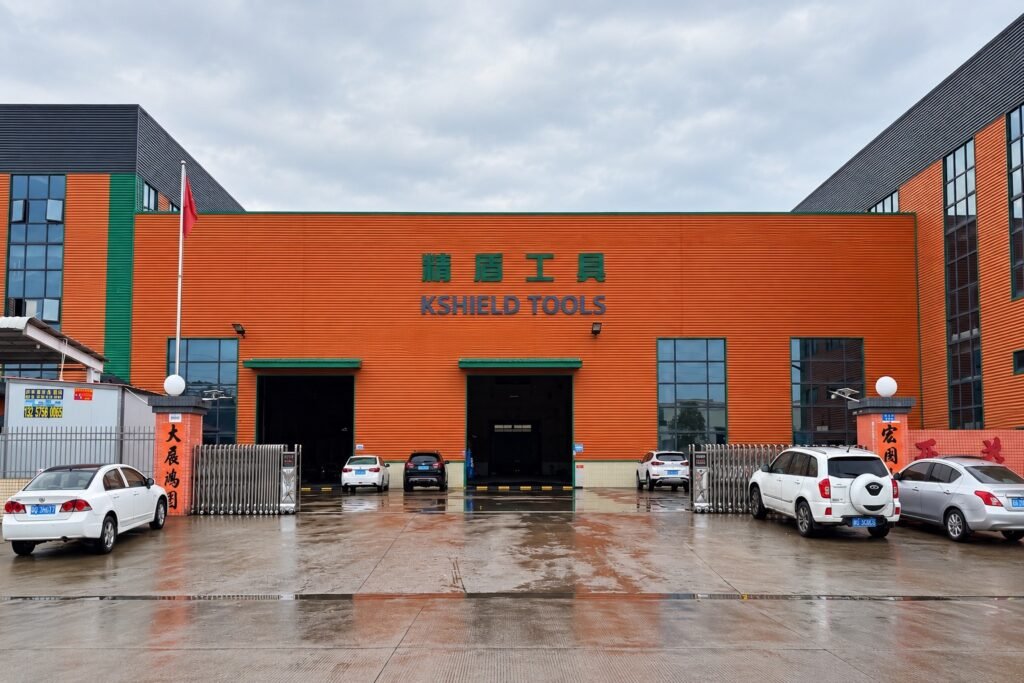
Kshield Tools is a multi-tool and knife manufacturer based in Yangjiang, Guangdong, China.
We specialize in manufacturing products for overseas brands, importers, wholesalers, distributors, and private-label businesses.
Our product range includes multi-tool pliers, hammer multi-tools, compact EDC tools, carabiner multi-tools, folding knives, and related products.
Our Manufacturing Capabilities
| Manufacturing Information | Kshield Tools |
|---|---|
| Factory Location | Yangjiang, Guangdong, China |
| Manufacturing Facility | 8,000 m² |
| Monthly Production Capacity | Approximately 300,000 pieces |
| R&D Team | 20 professionals |
| New Product Development | 15–20 products annually |
| Manufacturing Services | OEM, ODM, Private Label |
| Selected In-Stock MOQ | From 100 pieces |
| Typical OEM/ODM MOQ | 1,000–3,000 pieces, depending on requirements |
| Typical Mass Production Lead Time | 35–45 days after sample approval and deposit |
Our manufacturing capabilities include forging, CNC machining, precision grinding, surface finishing, assembly, and quality inspection.
We also support product customization involving handle designs, colors, finishes, logo marking, and packaging.
For buyers developing new product collections, our team can help evaluate existing product platforms and discuss suitable customization options.
Frequently Asked Questions
1. What is the typical MOQ for custom multi-tools?
MOQ depends on the product design, materials, customization requirements, and manufacturer.
At Kshield Tools, selected in-stock multi-tools have an MOQ starting from 100 pieces. OEM/ODM orders typically require 1,000–3,000 pieces, depending on project complexity.
Special customization requirements should be confirmed before ordering.
2. How long does it take to manufacture custom multi-tools?
Production time depends on the product and development requirements.
At Kshield Tools, prototype development typically takes 7–30 days, while mass production generally requires 35–45 days after sample approval and deposit.
Actual lead times are confirmed according to each project.
3. What information should I provide when requesting a multi-tool quotation?
To receive a more accurate quotation, buyers should provide:
- Preferred product model or reference images
- Estimated order quantity
- Target market
- Required materials or functions
- Logo and packaging requirements
- Expected delivery schedule
If you already have technical drawings or product samples, sharing them can help the manufacturer evaluate your project more efficiently.
Looking for a Reliable Multi-Tool Manufacturer in China?
Whether you are launching a private-label multi-tool collection, sourcing products for wholesale distribution, or developing a new OEM/ODM project, choosing the right manufacturing partner is essential.
Kshield Tools supports global B2B buyers with established product platforms, flexible customization options, manufacturing capabilities, and technical support.
We can help you explore suitable multi-tool products based on your target market, order volume, and customization requirements.
Ready to discuss your project?
Share your preferred product model, estimated order quantity, target market, and customization needs.
Our team will review your requirements and recommend suitable manufacturing options.