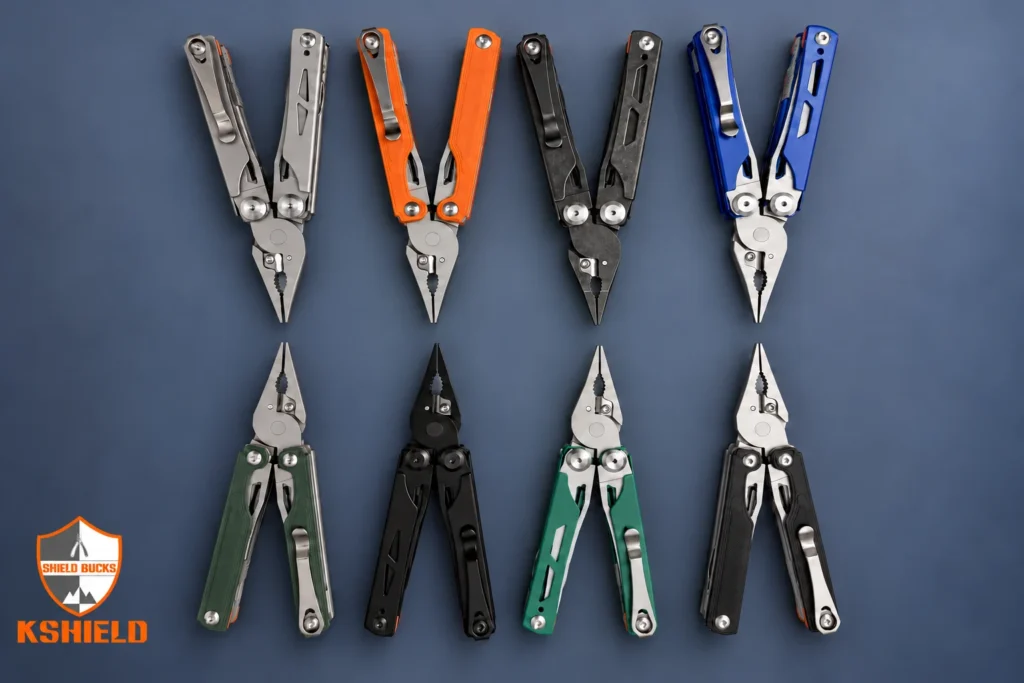
A custom multi-tool project can involve adding a logo to an existing product, selecting a different handle material or finish, or developing a new structure. These are different projects, with different requirements for sampling, production and approval.
For brands, importers and distributors, the first step is to define what needs to change and what should stay the same. A clear brief helps a manufacturer evaluate the product, prepare a meaningful quotation and develop a sample that can serve as an agreed production reference.
This guide explains how to plan custom multi-tools around product selection, materials, surface finishes, logo marking and packaging, and how to organize the information needed for an RFQ.
Quick Answer: What Can You Customize on a Multi-Tool?
Depending on the selected model and project, customization may include compatible handle materials, colors, surface finishes, logo placement, accessories and packaging. Availability needs to be checked for the specific product.
At Kshield, customization of an existing product platform keeps its basic structure and tool functions unchanged. Changes to the structure or function combination require a separate OEM feasibility review.
For an in-stock private-label order, the available product is the starting point: confirm logo marking and suitable packaging rather than assuming that its materials, colors, finish or functions can be changed.
1. Choose the Right Customization Route
Before discussing colors or artwork, decide whether you need branding, an appearance change to an existing platform, or product development.
| Project route | Starting point | What the buyer should confirm |
|---|---|---|
| Private label | An available existing product | Current model and stock availability, logo position and method, and compatible packaging |
| Existing-platform customization | An established model with its basic structure and functions retained | Feasible materials, colors, finishes, appearance details, accessories and packaging, together with production requirements |
| OEM development | A proposed new structure or change to the function combination | Technical feasibility, drawings or samples, development work, tooling where required, and a sample-validation plan |
These routes help define a Kshield project. Industry use of OEM, ODM and private label can vary, so record the actual scope in writing rather than relying on the label alone.
If the project is based on available stock, make the distinction explicit. Adding branding to a finished product does not turn it into a new-material or new-color production order. Any changes beyond the available stock configuration need to be reviewed separately.
For an overview of the available project routes, see Kshield’s OEM, ODM and private-label services.
2. Start with a Suitable Product Platform
Choose a model that already fits the intended use and sales channel before deciding how it should look. A logo and a different finish will not compensate for a product whose size, tool selection or handling does not suit the user.
For multi-tool pliers, compare the overall dimensions, folded form, tool access, grip and included functions. If your collection also needs hammer, carabiner or keychain formats, evaluate those as separate product platforms.
Give the manufacturer a model number, a product photograph or another clear reference. Then identify the features that matter most to your collection:
- Intended application and target user
- Required tool functions on the existing model
- Preferred size, weight and carrying format
- Handle appearance and grip preferences
- Accessories to be included
- Product positioning and sales channel
If a required function is absent from the selected model, ask whether another existing platform is a closer match. If a structural or functional change is still needed, it moves into OEM evaluation.
When comparing suppliers as well as products, our multi-tool manufacturer selection guide covers the wider sourcing decision.
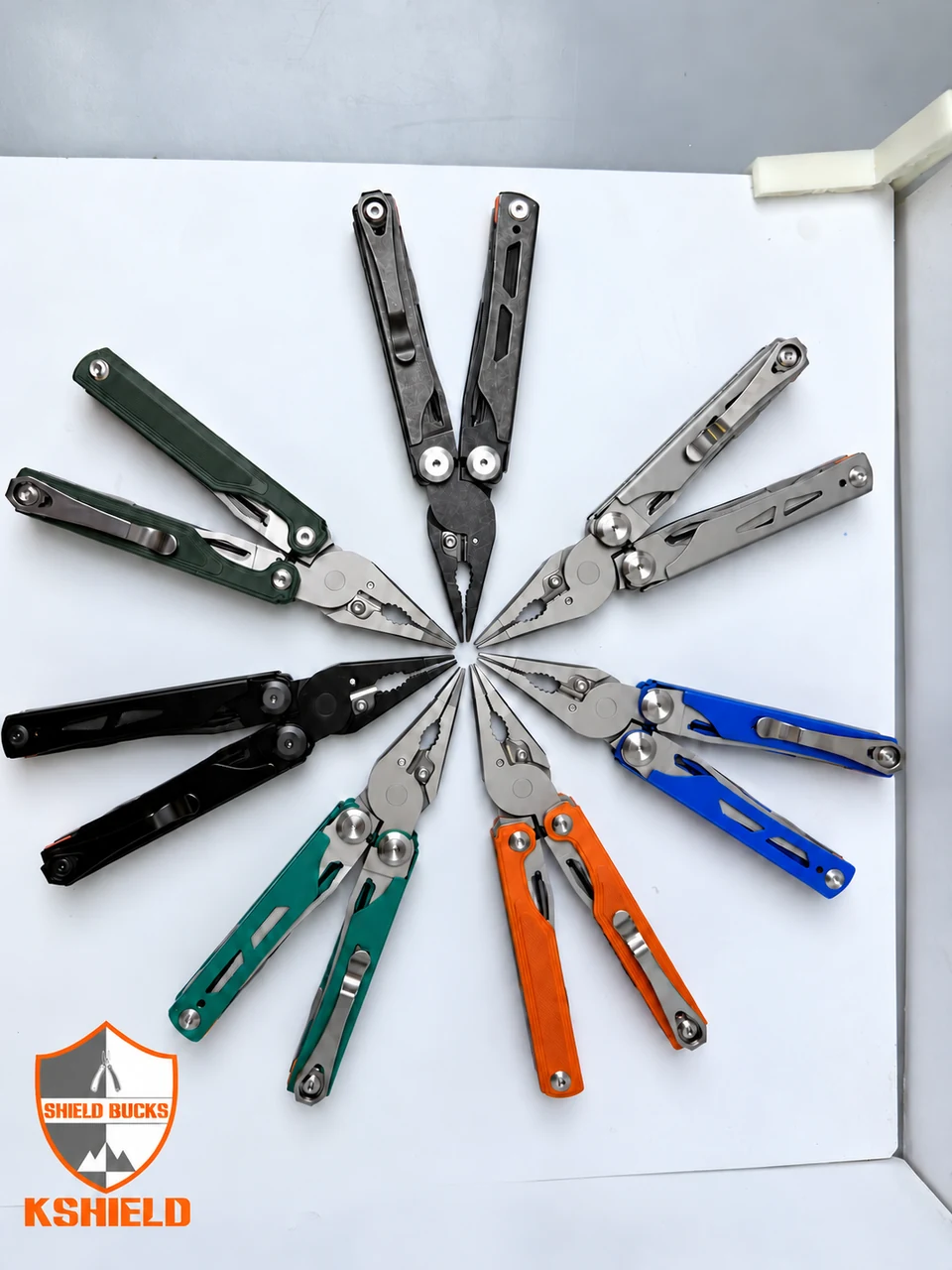
3. Specify Handle Materials, Colors and Surface Finishes Separately
Material, color and finish describe different parts of a specification. Keeping them separate helps prevent a quotation based on appearance alone.
For example, G10 identifies a handle-material option, while stonewashing and sandblasting describe finishing processes. A color photograph can be a useful reference, but it does not establish the material or process used to make the pictured part.
Ask which options are compatible with the selected model, and identify which component each request applies to. A request for a black handle is different from a request for a black finish on the tool components.
| Specification item | Information to include |
|---|---|
| Handle material | Requested material, the component concerned, and an approved sample or specification where available |
| Color | A physical reference or agreed color reference, with the relevant parts clearly identified |
| Texture | A description of the desired feel and appearance, supported by a sample or close-up photograph |
| Surface finish | The requested process or appearance, the components concerned, and an approved reference |
| Branding surface | The intended logo area and the marking method to be checked against that material and finish |
Treat photographs as starting points for discussion. Lighting, screens and surface texture can affect how a color or finish appears. Agree how the finished product will be compared with the reference before production.
The same principle applies to performance. Appearance alone does not establish corrosion resistance, wear resistance or other product characteristics. If a project has a specific performance requirement, include it in the brief and agree how it will be evaluated.
4. Plan Logo Marking Before Approving Artwork
Logo customization needs more than a brand name. The available space, underlying material, surface finish and marking method all affect the result.
Kshield’s published services include laser marking and printing where applicable. The appropriate method, position and size need to be confirmed for the selected product and surface; a method suitable for one model should not be assumed suitable for every model.
For a useful artwork review, provide:
- The logo and a viewable artwork preview
- Editable vector artwork, if available, with the accepted file format confirmed by the supplier
- Requested placement, size and orientation
- Whether the mark should be visible with the tool open, closed or both
- Any additional model identification or packaging artwork
Ask for a placement proof before marking a sample. Review the physical result for position, readability, contrast and consistency with the approved artwork. If marking durability is important to the project, agree an appropriate inspection or test requirement rather than inferring it from a digital preview.
5. Choose Packaging Around the Product and Sales Channel
Packaging should be planned alongside the product. The required contents, presentation, labeling and fit can affect both the quotation and the sample-approval process.
Kshield’s published packaging options include pouches, boxes, blister and gift packaging, subject to product compatibility and project requirements. Selecting a format is the starting point; the finished configuration still needs review.
For an individual retail product, specify whether the order includes a pouch, box, insert, instructions or accessories. For a gift set, list every item and confirm how the complete set will fit into the package.
Discuss the following before approving the packaging:
- The complete contents of one sales unit
- Package dimensions and how the product is held in place
- Artwork, text, barcode and label requirements
- The presentation required for the intended channel
- Master-carton requirements and carton markings
- Any inspection or transport-testing requirements agreed for the order
A mock-up can help with artwork and layout, but fit should also be checked with the actual product and the intended contents. Approve the product and packaging together so that a late change to a pouch, insert or accessory does not leave the package unsuitable.


Packaging images supplied by Kshield and edited for brand presentation. Contents, accessories and packaging are confirmed for each model and project; these examples are not a universal stock configuration.
6. Confirm MOQ, Sampling Terms and Timing for the Actual Project
There is no single order quantity or production schedule that applies to every custom multi-tool project. The selected model, current availability, materials, required changes and packaging all need to be considered.
When requesting a quotation, ask the manufacturer to separate the relevant items:
- Product specification and order quantity
- Logo marking and artwork requirements
- Packaging and accessories
- Sampling charges and approval requirements
- Development or tooling requirements, where applicable
- Production timing and the conditions for starting production
- Shipment arrangements and the required delivery date
Distinguish a target delivery date from a confirmed production schedule. Sampling, artwork approval, packaging confirmation and shipment are separate parts of the project, and changes after approval may require a revised plan.
For Kshield projects, MOQ, sample arrangements and delivery timing are confirmed after reviewing the specific requirements. Send the required quantity and planned launch or delivery date at the beginning of the discussion.
7. Approve a Complete Sample Reference
Use sample approval to confirm the combined result, including the product, finish, branding, accessories and packaging. A sample with the right color but the wrong logo placement is not a complete approval reference.
For a multi-tool, the agreed review may include:
- Correct model and tool configuration
- Opening and closing movement
- Alignment and assembly appearance
- Locking operation, where a locking mechanism is fitted
- Handle material, texture, color and finish
- Logo artwork, position and readability
- Included accessories, labels and packaging fit
Record approved details and any remaining changes. If a sample is approved subject to corrections, list those corrections clearly and agree how they will be verified. Keep the final specification, artwork and sample reference consistent with one another.
8. Prepare a Clear RFQ for Custom Multi-Tools
A useful RFQ allows the manufacturer to understand the intended product and identify what still needs technical or commercial review. You do not need to know every production detail before making contact, but you should distinguish confirmed requirements from open questions.
Use this starting brief:
| RFQ item | What to provide |
|---|---|
| Product reference | Preferred model, photographs, drawings or a physical-sample reference |
| Quantity | Estimated initial order quantity and expected repeat demand, if known |
| Target market | Countries or markets where the product will be sold |
| Product configuration | Existing functions to retain and any changes requiring review |
| Material and finish | Requested handle material, color, texture and component finishes |
| Logo | Artwork, placement, size and preferred method for evaluation |
| Packaging | Sales-unit contents, package format, labels and artwork |
| Inspection requirements | Specifications or tests that need to be agreed |
| Timing | Preferred delivery date and any fixed product-launch deadline |
If some details are undecided, say so. Asking for available options is more useful than presenting an uncertain assumption as a fixed requirement.
Frequently Asked Questions
Can I add my logo to an existing multi-tool?
Selected existing products can be reviewed for private labeling. Confirm the actual model, available marking area, compatible method, quantity and packaging before ordering.
Can I change the color or finish of an in-stock product?
An in-stock order uses the available product configuration. Changes to materials, colors, finishes or functions are not part of simply adding a logo to existing stock. Request a separate review if those changes are needed.
Can I change the tools or function combination?
For Kshield’s existing-platform customization route, the basic structure and tool functions remain unchanged. A change to structure or function combination requires OEM feasibility review. The manufacturer can also help identify whether another existing model is a closer match.
Can the product and packaging both carry my brand?
Compatible product marking and branded packaging can be discussed together. Provide artwork for both and confirm each item in the sample-approval process.
What are the MOQ and lead time for a custom multi-tool order?
They are confirmed for the specific project after reviewing the product, quantity, required changes, sampling and packaging. Provide your required quantity and target delivery date when requesting a quotation.
Discuss Your Custom Multi-Tool Project with Kshield
Start with a suitable product platform and a clear description of the changes you need. Kshield can review the proposed branding, compatible materials, finishes and packaging, or assess a project requiring OEM development.
Share your preferred model or reference image, estimated quantity, target market, logo and packaging requirements. Our team will review the information and discuss the appropriate next steps.